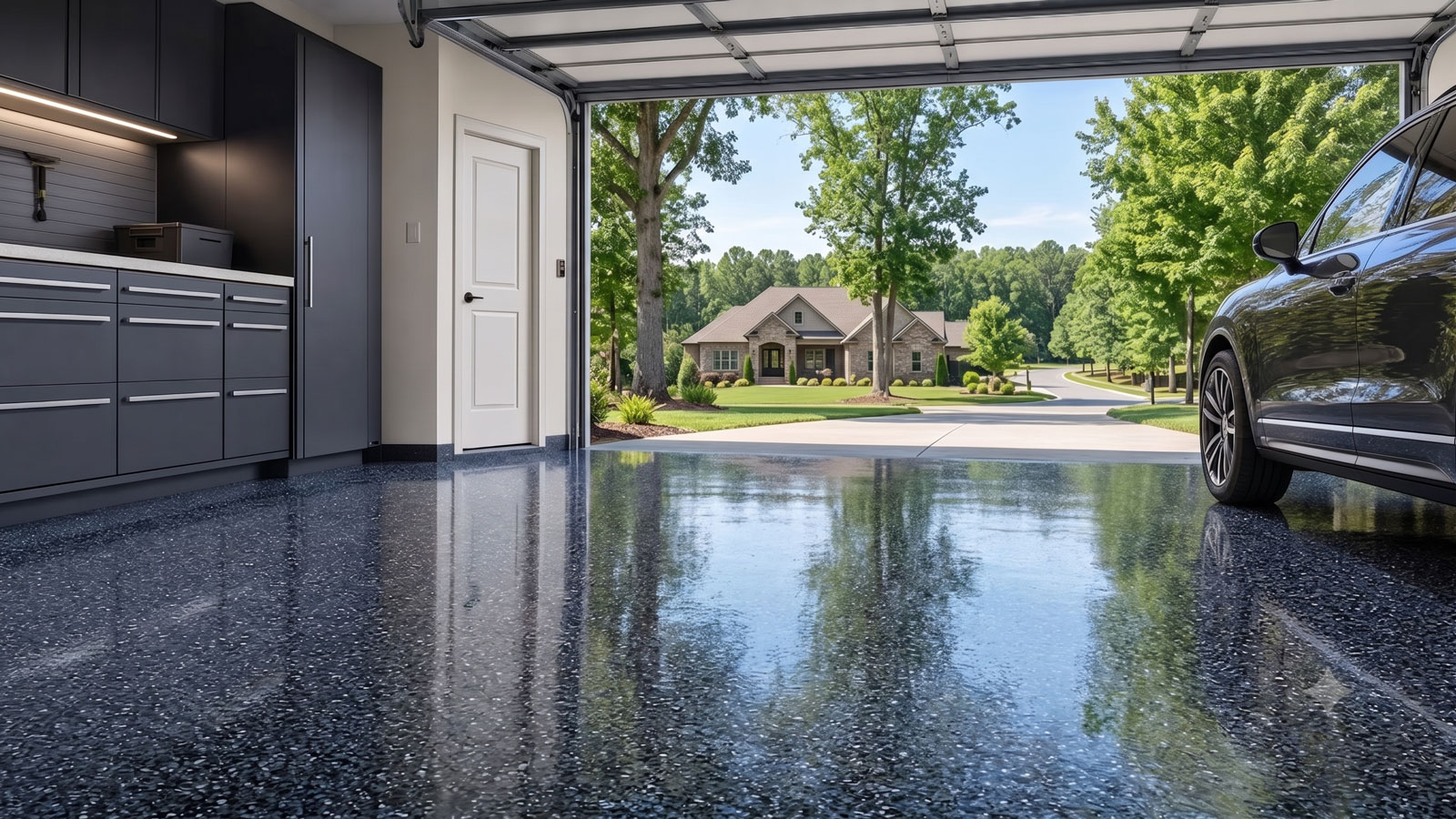
Garage Floor Coating in Loveland, OH
Floor Coating Services in Loveland, OH
Loveland is closely tied to the Little Miami River, and the city has a documented flood history. That does not make every garage wet, but it makes property-specific floodplain, drainage, and water-entry history especially important before installing a floor coating. Loveland's older core and later suburban growth create garage floors with very different slab ages, access patterns, and repair histories.
Homes also vary from older structures near the historic core to newer suburban development. Older garage floors may have repairs, paint, or moisture evidence, while newer attached garages may mainly need profiling, joint work, and clean staging. The Little Miami River is an important local anchor, but floodplain or river proximity should prompt inspection rather than an automatic moisture diagnosis.
For river-oriented and recreational households, garages may store bikes, kayaks, outdoor gear, and wet equipment. A cleanable, textured finish can be useful, but only after the slab is confirmed to be a suitable substrate. Recreational use and older-town access add another layer beyond the river setting itself.
Local Market Insight
Loveland's Little Miami River setting and flood history make actual property water exposure a particularly important gate. Recreational storage and wet gear also make traction and cleanup more relevant than purely decorative gloss.
What Affects the Cost of Garage Floor Coating in Loveland?
Loveland project scope can vary with older coatings, repairs, recreational storage, threshold drainage, river-area water history, winter residue, and access. Established core garages and newer suburban floors can require very different preparation despite similar square footage.
- Property water history: Known flooding, seepage, or repeated runoff deserves evaluation before coating. The quote should identify exactly what removal or repair is included before coating.
- Older core slabs: Paint, repairs, and unknown surface treatments can add removal work. Check the actual property condition rather than inferring drainage from the neighborhood alone. directly.
- Recreational storage: Bikes, kayaks, and outdoor gear can require staging and influence traction preferences. Mechanical preparation should reach sound concrete rather than simply roughen the surface.
- Cracks and patching: Older concrete may need more localized repair. The repair plan should distinguish stable cracks from joints intended to move. directly
- Threshold drainage: Water at the garage door should be managed before the coating is expected to perform. Match traction and cleanability to how the garage is actually used.
- Flood-history evaluation: A property with known Little Miami River or tributary flooding may need moisture and building-water evaluation before any coating system is selected.
Call for a clear, project-specific estimate — or request one online.
Local Garage-Floor Conditions in Loveland
If a Loveland property has a known flood history, do not treat coating as waterproofing. The slab and building should be evaluated for actual moisture conditions first.
For garages that hold wet bikes or outdoor equipment, a practical texture can reduce slipperiness while still keeping the floor sweepable and washable.
Older floors near the historic core may need removal of paint or sealers before grinding can produce a consistent surface profile.
Little Miami River Context Changes the Moisture Conversation
Loveland's river setting is a legitimate local factor, but it should be applied carefully. The useful question is not whether the city floods; it is whether this specific garage has a history of water or lies in a mapped risk area.
That property-level distinction keeps the coating decision factual and prevents a decorative system from being asked to solve a building-water problem.
Loveland Has Documented River Flood History
Loveland developed around the Little Miami River and records major floods in 1913 and 1959. A levee and channel were constructed in 1962 to reduce major flood risk, and the river still runs directly through the city.
That history should be used carefully. It does not mean every garage is wet; it means homeowners near low areas or with known water history should distinguish river or stormwater exposure from ordinary wet bikes, kayaks, and vehicle snowmelt before coating.
For Loveland properties, river context is useful only when connected to evidence at the garage. A home near the Little Miami can have a completely dry slab, while a higher property can still receive runoff from a sloped driveway. The estimate should separate flood or drainage history from coating removal, repair, profiling, and the traction needs created by bikes or outdoor gear.
Loveland's mix of older core properties and newer suburban garages also changes access and use. A compact detached garage near the historic core may require tighter staging and more edge work, while a newer multi-bay floor may add joints, steps, and storage systems. Those project details should be evaluated separately from river-related drainage and from the surface preparation needed for adhesion.
Loveland garages also vary in how they are used. Bikes, kayaks, lawn equipment, tools, and family storage can create different traction and cleanup priorities than a parking-only floor. Those use conditions should be documented after the slab and drainage are understood so the finish reflects the property without confusing recreational moisture with active water intrusion.
Loveland Garage Floor Coating FAQs
Can a Loveland garage in a flood-prone area be coated?
Possibly, but only after the property's moisture and flood history are understood. A coating is not a floodproofing system. at the specific property. during the on-site evaluation.
What finish works well for bikes and wet outdoor gear?
A flake system with sensible texture can provide traction and make dirt easier to disguise between cleanings. at the specific property. during the on-site evaluation.
Should efflorescence be coated over?
No. White mineral deposits can indicate moisture movement and should be investigated before coating. at the specific property. during the on-site evaluation.
Do older Loveland garages need different prep?
They may. Old paint, repairs, contamination, and unknown sealers can increase preparation compared with a newer slab. at the specific property. during the on-site evaluation.
Did Loveland's 1962 levee eliminate all garage flood risk?
No. The levee and channel reduced major flood risk, but property-level drainage, mapped flood zones, tributaries, and extreme events can still matter. Check the specific property rather than assuming citywide protection. at the specific property. during the on-site evaluation.
Loveland Neighborhoods & Local Context
Phone Quote Line
Speak with a floor coating specialist about your project and get a realistic estimate range.
(513) 866-3188Typical Project Cost
$3,000–$5,500
Typical range for a two-car garage. Final pricing depends on floor size, concrete condition, prep work, coating type, and finish options.
Helpful Guides
Other Service Areas